
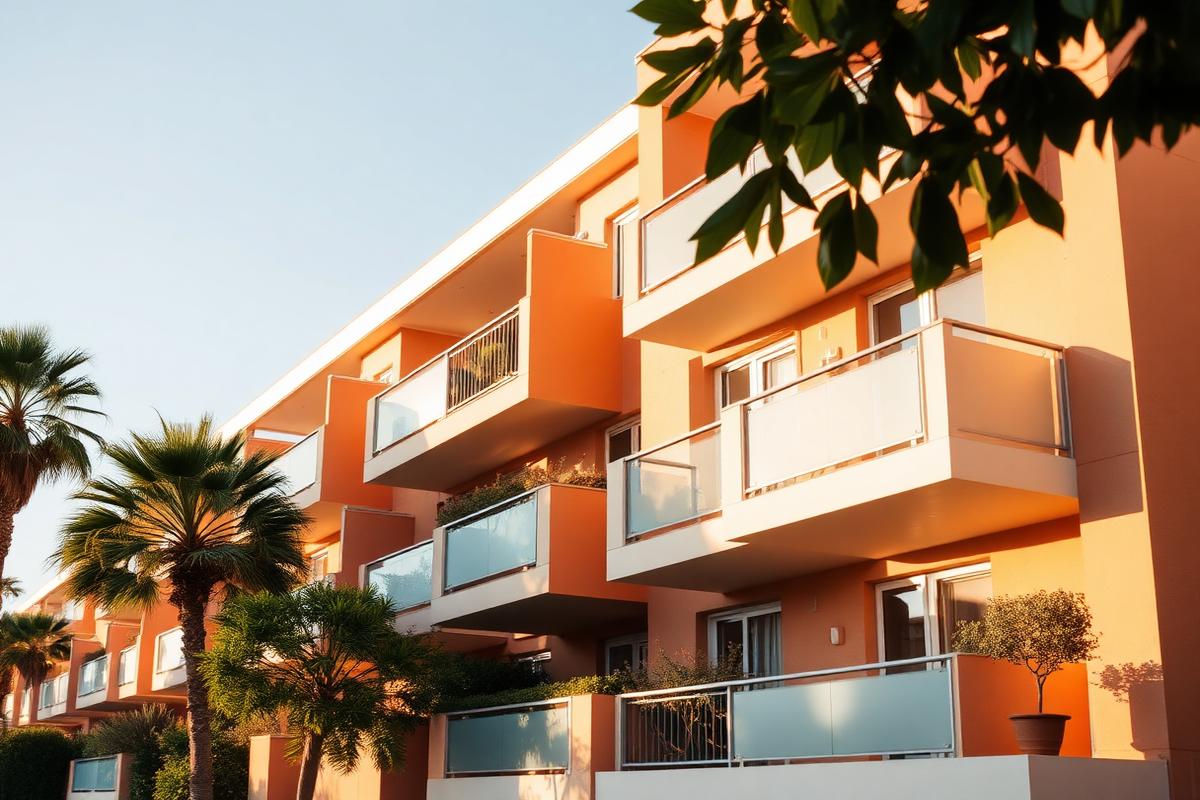
Home orientation on the Costa del Sol: terrace sunlight and shade
By: SpainProperty editorial team · editorial and sourcing standards
On the Costa del Sol, assess a home's orientation alongside your intended months of use, the windows of individual rooms and actual shading. A south- or west-facing label alone does not tell you when the terrace will be sunny. For a new-build apartment, start with the selected unit's floor plan and a seasonal sunlight study.
Someone wanting lunch on the terrace in January may have different priorities from someone working from home in August. No compass direction is best for every buyer. The comparison below helps you assess your daily routine alongside the view, before reserving.
What do south-, east- and west-facing mean?
ICAEN, the Catalan government's energy institute, explains that sunlight reaches a south-facing façade at a lower angle in winter and a higher angle in summer; appropriate shading can make use of this difference. East- and west-facing windows require particular attention to protection against lower-angle morning and afternoon sunlight respectively. This is a general building-energy principle, not a sunlight guarantee for a particular Costa del Sol home. Source: ICAEN, orientation and solar protection.
For buyers, this means asking about shading alongside the south-facing description. Test morning use in an east-facing home and afternoon use in a west-facing one. Do not accept or reject a north- or northeast-facing option solely by its label either: check openness to the sky, neighbouring buildings and light in each room separately.
Sea views and orientation are separate facts. Do not infer compass direction from water shown in a sales image, or automatically treat the whole building's direction as that of every apartment. A corner apartment's living room, bedroom and terrace may face different directions.
Decide when you would use the home first
Write down three specific situations: for example, winter terrace lunches, summer afternoon work in the living room and breakfast outdoors. Assign each to a room, season and time of day. You can then send the same questions about every shortlisted apartment and compare the answers.
| Intended use | Check this first | Request this for the actual apartment |
|---|---|---|
| Several months of winter residence | Winter sunlight in the living room and terrace dining area | A winter-date shadow study including balconies above |
| Mainly summer holidays | Usable terrace shade and protection in front of windows | Exact plans and specifications for roofing, awnings and external shading |
| Working from home | Desk and screen positions, and control of light | A dimensioned floor plan and window and shading details |
| Year-round personal use | Balance between winter light and summer shade | A winter and summer comparison for the same apartment |
The table is a buyer decision framework, not a compass-direction rating. Once you have answers, rank what is essential, what is a welcome benefit and which compromises you can accept. Mark “sea-facing” or “sunny” as meeting your needs only when you have a meaningful answer for the room and period that matter to you.
Why can terraces with the same orientation differ?
The Spanish state energy institute IDAE's 2007 technical guide highlights checking solar obstructions caused by buildings and examining shadow plans. We use this older publication for the underlying shading principle, not as current legislation or market data. Source: IDAE, Guía del planeamiento urbanístico energéticamente eficiente, section 4.3.
Give the floor, terrace depth, balcony or roof overhang above, side walls and opposite building separate rows on your checklist. Request a section or elevation showing them together. You can also assess the terrace's size and furnishing possibilities using the guide to Spanish apartment floor areas and terraces.
Fictional comparison: two offers both describe a south-facing terrace. One plan shows a deep balcony above; the other shows an open terrace. You would request the same two-season assessment for both winter lunches and summer shade. Neither earns a higher score from the word “south” alone. This example is not a real property and makes no claim about measured sunshine hours.
If a development has several construction phases, ask which buildings the shadow study includes. A currently empty plot or a first-phase visualisation does not fully explain the future planned surroundings. Request separate identification of known plans and matters for which verifiable information is not yet available.
Two seasons, three times of day: a suggested checking pack
When buying off-plan, request a comparison for one winter day and one summer day, each showing morning, midday and late afternoon. This is a suggested buyer method, not a list of documents that must necessarily be available. If the developer does not supply it, have a suitable technical professional investigate the question that determines your choice; do not replace missing information with assumed sunshine hours.
- 1.Identify the apartment. Development, building, floor, unit number and plan revision must match the offer. Check a mirrored layout separately.
- 2.Find the north arrow. Mark the living room, main bedroom and terrace directions; do not treat the brochure's page orientation as a compass.
- 3.Request the study details. Date, local time and modelled surroundings should be stated. Focus on an understandable shadow boundary rather than an attractive render.
- 4.Follow the same spot. Track the terrace table, sofa and desk positions across all three times in both seasons.
- 5.Distinguish the evidence. A computer study is a model; a photograph captures a particular moment. Treat neither as a year-round measurement.
For a completed home, where possible also visit at the time you would use your most important function. Ask for photographs' dates, times and exact unit identifiers. Pictures of a different floor or show home do not resolve uncertainty about the selected apartment. Do not extrapolate a single cloudy or sunny visit to the entire year.
In the material received, distinguish direct sunshine, shaded terrace areas and light entering the room. The outdoor table can be shaded while the living room still feels bright. State your expectation precisely: direct sun on your skin, a bright workspace or a shaded seat for summer lunch?
Is the shading actually included in the offer?
The national Spanish CTE DB-HE document checked on 5 November 2026 addresses solar control specifically within section HE 1 on controlling building energy demand. This is a technical design requirement, not confirmation that the terrace will suit your preferred time of use. Source: Código Técnico de la Edificación, DB-HE, HE 1, section 3.1.2.
Ask what provides the shade: a built canopy, external blinds, shutters, an awning or another solution? What is included in the base price, what must be ordered separately and how is it operated? Clarify the possibility of later installation in writing too. An awning in a visualisation alone does not establish promised equipment; the Spanish new-build specifications checklist helps you investigate.
An energy-rating letter and your comfort expectations require separate questions about use. If cooling costs determine your choice, request an estimate based on your occupancy plan with its assumptions stated. Do not calculate a monthly electricity bill from orientation alone. The guide to interpreting energy certificates explains this distinction in more detail.
What belongs on your final comparison sheet?
For every candidate, record the exact unit identifier, important rooms' directions, months of use, promised shading and unanswered questions. Note the basis of each answer: a dated plan, model, photograph or personal viewing. Keep an uncertain row open rather than automatically scoring it favourably.
A useful decision combines compass direction, the actual apartment and time of use. Identify the property first, request a winter–summer comparison next, then confirm the actual shading. South-, east- or west-facing then becomes a verifiable feature assessed against your own needs.
During a Hungarian-language SpainProperty consultation, explain which months you would use the home and when you would like to sit on the terrace, alongside location and budget. These are useful starting points for comparing Costa del Sol new-build apartments.
Sources and further verification
Ready for the next step?
Request a free, personalised quote on Costa del Sol properties.
Request an offer →